
What causes hair loss in women?
Hair loss in women can be confusing because increased shedding and gradual thinning can have very different causes. While some hair shedding is normal, persistent or noticeable changes in hair density are worth investigating rather than simply treating with supplements or hair products.
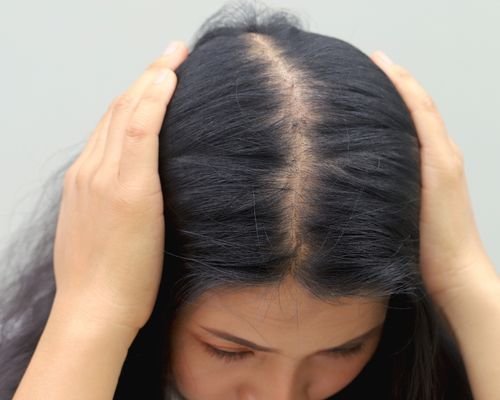
What are the most common causes of hair loss in women?
One of the most common causes is female pattern hair loss, a hereditary form of progressive thinning. It often appears as a widening part, reduced density on the top of the scalp or a thinner ponytail. It can begin earlier in life, although it becomes more common with age and around menopause.
Other possible causes include:
- Telogen effluvium: increased shedding following triggers such as significant stress, illness, childbirth or major changes in the body.
- Nutritional deficiencies: inadequate iron, protein, zinc or other nutrients can contribute to noticeable hair loss.
- Hormonal changes: conditions such as PCOS and hormonal changes associated with pregnancy or menopause can affect hair growth.
- Thyroid disorders: thyroid disease can cause thinning or increased hair shedding.
- Traction alopecia: repeatedly wearing tightly pulled hairstyles can damage follicles and, over time, cause permanent hair loss.
- Alopecia areata and other scalp conditions: some forms of hair loss are related to autoimmune disease or inflammation and may present differently from gradual thinning.
How can you tell if you’re losing too much hair?
The pattern of hair loss can offer some clues.
You may notice a widening part, a thinner ponytail or gradually reduced density. These are common early signs of female pattern hair loss.
Other women notice a sudden increase in hair coming out while washing or brushing, or shedding that begins a few months after an illness, stressful event or childbirth. This can point towards excessive shedding rather than progressive pattern hair loss.
Sudden or patchy hair loss deserves particular attention because it can have different causes and may require prompt assessment.
Is hair shedding always a sign of hair loss?
No.
Losing some hair every day is normal. The NHS estimates that people can normally lose around 50 to 100 hairs a day without noticing.
The more important question is whether there has been a persistent change from your usual pattern — such as noticeably increased shedding, progressive thinning or reduced overall density.
When should you see a dermatologist for hair loss?
Consider seeing a dermatologist if your hair loss is persistent, worsening, sudden or associated with other scalp symptoms.
A dermatologist can assess the pattern of hair loss and determine whether it is female pattern hair loss, excessive shedding or another condition. This distinction matters because different causes require different approaches.
It is particularly important not to assume that all hair loss is caused by a nutritional deficiency or hormonal problem and start treatment without understanding the underlying cause.
Why finding the cause matters
Hair loss is a symptom, not a single condition. Two women may both notice thinning hair but have completely different reasons for it — and therefore need completely different treatment.
For female pattern hair loss, early treatment can help slow progression and support regrowth. Other forms of hair loss may improve once the underlying trigger or medical condition is addressed.
Dr. Shalini Malhotra approaches hair loss by first understanding the pattern, extent and likely cause of hair loss before recommending a treatment plan. For women considering hair restoration, identifying whether the loss is stable, progressive or potentially reversible is particularly important before considering procedures such as a hair transplant.
The first step is therefore not always to ask, “What treatment should I get?” It is to ask, “Why am I losing my hair?”