
What are the best treatments for skin tightening?
As we get older, skin gradually loses collagen, elastin and some of its structural support. The result can be skin that feels less firm, mild sagging around the jawline or cheeks, and changes in facial contour.
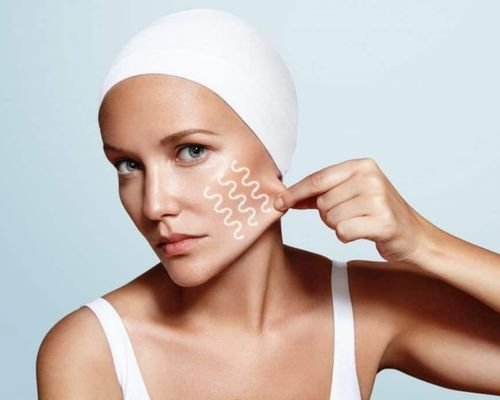
If you are noticing these changes, there are several non-surgical treatments that can improve skin firmness and definition. But there is no single “best” skin-tightening treatment for everyone. The right option depends on how much laxity you have, where it is present, your skin quality and the result you want to achieve.
What causes skin to lose firmness?
Collagen and elastin production naturally decline with age. Changes in facial fat distribution, sun exposure and other factors can also contribute to changes in skin quality and facial contour.
Not everyone experiences ageing in the same way. Some people are primarily concerned with fine lines and skin texture, while others notice sagging around the cheeks, jawline or neck.
This distinction matters when choosing a treatment.
What is the best treatment for skin tightening?
For mild to moderate skin laxity, several non-surgical technologies can be considered.
HIFU and microfocused ultrasound use focused ultrasound energy at specific depths beneath the skin. The controlled energy stimulates a tissue-healing response and collagen remodelling, which can gradually improve skin firmness and lifting. Research has found improvements in facial skin laxity, particularly in areas such as the lower face and neck.
Radiofrequency (RF) uses electromagnetic energy to heat targeted tissue. This can stimulate collagen remodelling and improve skin elasticity and firmness. Systematic reviews have found measurable improvements in facial skin laxity and other signs of skin ageing following RF treatment.
Other treatments may also be useful depending on what you are trying to improve. For example, some treatments are better suited to skin texture, pigmentation or volume loss than to laxity itself.
Can you tighten loose skin without surgery?
Yes, mild to moderate skin laxity can often be improved without surgery.
Non-surgical treatments such as HIFU and RF can stimulate collagen remodelling and improve firmness without surgical incisions. However, they are not equivalent to a surgical facelift.
If there is significant excess or severely sagging skin, non-surgical treatments may provide limited improvement. Setting realistic expectations is an important part of deciding whether a treatment is appropriate.
What is the difference between HIFU and RF skin tightening?
Both HIFU and RF can be used for skin tightening, but they use different forms of energy and interact with tissue differently.
HIFU delivers focused ultrasound energy at selected depths, while RF uses radiofrequency energy to generate controlled heating in targeted tissue.
The choice between them should not simply come down to which technology is newer or more popular. The treatment should be selected based on the patient’s degree and location of laxity, skin characteristics and desired outcome.
How long do skin-tightening results take?
Skin tightening is generally not an instant process.
Treatments that stimulate collagen remodelling typically produce gradual changes as the skin responds and remodels. Some improvement may be noticeable earlier, but results can continue developing over the following months. The exact timeline depends on the treatment used, the individual’s response and the degree of laxity being treated.
This is also why photographs taken immediately after a treatment should not necessarily be considered the final result.
Is skin tightening the same as facial contouring?
Not necessarily.
Skin tightening primarily addresses laxity and firmness. Facial contouring can involve other factors, including the distribution of facial fat, muscle activity and volume changes.
Someone concerned about a less-defined jawline, for example, may have a combination of mild skin laxity and changes in facial volume. Simply tightening the skin may not address every component of the concern.
A good treatment plan therefore starts with understanding what is actually contributing to the change in facial appearance.
How do you choose the right skin-tightening treatment?
The most appropriate treatment depends on the individual rather than the name of the technology.
A dermatologist may consider:
- The degree and location of skin laxity
- Skin quality and elasticity
- Facial structure and contour
- Age-related changes in volume
- Previous aesthetic treatments
- The degree of improvement you are hoping to achieve
- How much downtime you are comfortable with
The goal is to match the treatment to the concern, rather than choosing a procedure simply because it is currently popular.
The goal is natural-looking rejuvenation
Skin tightening should ideally make the skin look firmer and more refreshed without making the face look artificially altered.
At Skin ’n Smiles, treatment planning is based on the patient’s individual skin concerns, facial structure and aesthetic goals. Depending on the concern, treatments such as HIFU, radiofrequency and other skin-rejuvenation approaches may be considered as part of a personalised plan.
The right treatment isn’t necessarily the one with the most impressive-sounding technology. It is the one that is appropriate for your skin, your degree of laxity and the result you want to achieve