
What women should consider before choosing a hair transplant clinic in India
Choosing a hair transplant clinic is an important decision, particularly for women, whose hair loss patterns, aesthetic goals and surgical requirements can differ from those typically seen in men.
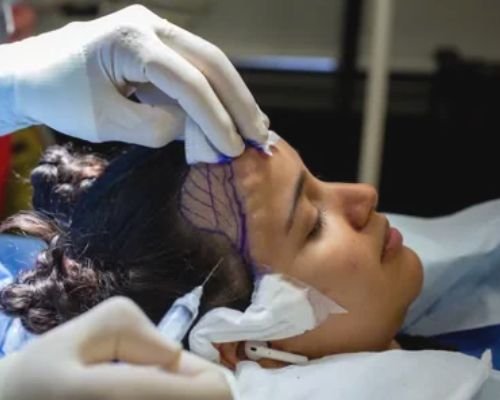
While hair transplantation can restore hair in selected cases, it is not suitable for every woman experiencing thinning. The cause of hair loss, stability of the donor area, surgical technique, hairline design and long-term treatment plan all influence whether surgery is appropriate and what it can realistically achieve.
If you are considering a hair transplant in India, it is worth looking beyond the number of grafts offered or the name of the technique being advertised. Understanding the medical and aesthetic considerations involved can help you make a more informed decision.
1. Establish whether a hair transplant is right for you
Before comparing clinics, establish what is causing your hair loss and whether surgery is likely to help.
Female pattern hair loss is a common cause of gradual thinning. It often presents as a widening parting, reduced density across the crown or a general reduction in hair volume. However, women can also experience hair loss due to thyroid disorders, nutritional deficiencies, hormonal changes, certain medications, stress or illness. Some inflammatory scalp conditions can cause permanent hair loss and require medical treatment.
These conditions do not all respond to the same treatment. Hair shedding caused by a temporary trigger, for example, may improve once the underlying cause is addressed. A hair transplant may be unnecessary or inappropriate in such cases.
Female pattern hair loss also requires careful assessment. Unlike the more defined areas of baldness often seen in men, women may experience thinning across a large part of the scalp, including areas that would ordinarily supply donor hair for transplantation.
A consultation should therefore establish:
- The likely cause and pattern of your hair loss.
- Whether the condition is stable or continuing to progress.
- The health and density of your donor hair.
- Whether medical treatment could help preserve or improve existing hair.
- Whether transplantation is likely to provide a meaningful improvement.
A dermatologist or appropriately qualified hair-restoration specialist should assess your scalp and medical history. Blood tests or further investigations may be recommended when the findings suggest an underlying medical cause.
The first question should not be how many grafts you need, but whether a transplant is the right treatment for your particular type of hair loss.
2. Pay close attention to hairline design
Hairline design deserves particular attention when women are considering hair restoration. The frontal hairline and temples frame the face, so even a technically successful transplant can look unnatural if the design does not suit the individual’s features.
Women seeking hair restoration may want to restore a receding hairline, address thinning around the temples, improve density near the front or lower a naturally high forehead. Each objective requires a different approach.
A well-planned hairline should take several factors into account:
- Facial proportions: The hairline should complement the forehead, facial structure and overall appearance.
- Natural contour: A soft, appropriately shaped hairline generally looks more natural than an excessively straight or sharply defined one.
- Hair direction and angle: Transplanted hair should follow the direction and pattern of the surrounding hair.
- Graft selection and placement: The distribution of finer, single-hair grafts and denser graft groupings affects how natural the hairline appears.
- Existing hair: Where hair is already present, planning must account for its density and direction while minimising the risk of damaging vulnerable follicles.
- Future hair loss: The design should remain appropriate if thinning progresses elsewhere over time.
A hairline should not be designed in isolation from the rest of the scalp. It needs to fit the patient’s existing hair, likely future hair-loss pattern and long-term restoration goals.
Hairline design requires an understanding of facial proportions, natural hair growth patterns, graft characteristics and the long-term progression of hair loss. It is an important part of surgical planning and should be discussed directly with the surgeon performing the procedure.
During your consultation, ask who will design your hairline, how the design will be tailored to your features and how the surgeon plans to achieve a natural transition between the transplanted and existing hair.
3. Understand the technique being recommended
Follicular unit transplantation (FUT) and follicular unit extraction (FUE) are two established methods of harvesting hair follicles for transplantation. Understanding the difference can help you discuss which approach may be suitable for you.
FUE (follicular unit extraction) involves removing individual follicular units from the donor area using small punches. It avoids the linear incision associated with FUT, although it can leave multiple small scars that may become visible depending on factors such as harvesting, healing and hairstyle.
FUT (follicular unit transplantation) involves removing a strip of scalp from the donor area, from which follicular units are prepared for transplantation. It leaves a linear scar, and its suitability depends on factors such as scalp characteristics, donor availability and the patient’s preferences.
Neither technique is automatically the best choice for every woman. The decision should account for donor density, hair characteristics, the number of grafts required, hairstyle preferences and the surgeon’s assessment.
You may also come across terms such as unshaven FUE, implanter-based implantation or branded procedures described as advanced or specialised techniques.
An unshaven transplant may allow suitable patients to retain more of their existing hair length, although the extent of shaving required varies with the approach. It does not automatically make someone a suitable candidate or guarantee a better result.
Similarly, instruments used for implantation can vary between surgeons. What matters is how the procedure is planned and performed, whether existing hair is protected, and whether the chosen approach suits your needs.
Ask the clinic to explain what the recommended technique involves, why it is appropriate for you and what its limitations are. A clear explanation is more useful than a marketing label alone.
4. Understand who performs each stage of the surgery
A hair transplant involves several stages, including donor harvesting, graft handling, preparation of the recipient area and implantation. The responsibilities of the surgeon and supporting team can vary between clinics.
Before proceeding, understand exactly who will perform each stage of your procedure. Ask whether the surgeon will personally carry out the extraction, create the recipient sites and implant the grafts, or whether some of these stages will be delegated to other team members.
Some clinics have surgeons perform the key surgical stages, while others delegate certain steps to trained technicians. Patients should understand this distinction, particularly who performs graft extraction, recipient-site creation and implantation.
This matters because surgical planning, graft handling and placement all contribute to the final outcome. The surgeon’s role should be clear before you consent to treatment.
Useful questions include:
- Which stages of my surgery will you personally perform?
- Who will handle and prepare the extracted grafts?
- Who will create the recipient sites?
- Who will implant the grafts?
- How will the team minimise damage to existing hair and protect grafts during the procedure?
There is no substitute for understanding the actual process rather than relying on general assurances that the clinic uses an experienced team.
5. Evaluate donor hair management and graft planning
Hair transplantation redistributes existing follicles; it does not create new ones. The donor supply is therefore limited, and how it is managed has implications for both the immediate result and future treatment options.
The surgeon should assess donor density, hair thickness, the distribution of finer or miniaturised hairs, and the amount that can be safely harvested. In women, this is particularly important because thinning may also affect the back and sides of the scalp.
The number of grafts recommended should reflect the area being treated, the desired improvement, the quality of the donor hair and the need to preserve the remaining density.
A higher graft count does not necessarily mean a better transplant. Removing too many grafts from the donor area can leave visible thinning, while placing more grafts into an area with existing hair can increase the risk of damaging those follicles.
Ask your surgeon:
- How will you assess the quality and stability of my donor area?
- How many grafts do you recommend, and why?
- How will harvesting affect the appearance of the donor area?
- How will you protect existing hair in the recipient area?
- How will you preserve donor hair for possible future needs?
A well-planned transplant balances the improvement sought in the recipient area with the need to maintain a natural appearance across the scalp.
6. Check the surgeon’s qualifications and experience
Hair transplantation requires surgical skill, aesthetic judgement and an understanding of hair-loss disorders. When choosing a clinic, look at the qualifications and relevant experience of the surgeon who will be responsible for your procedure.
Check their medical qualifications, specialist training in hair restoration and experience with cases similar to yours. You may also come across credentials such as Diplomate of the American Board of Hair Restoration Surgery (ABHRS), an international board certification focused specifically on hair restoration surgery.
A surgeon’s credentials should be considered alongside their practical experience, surgical involvement and familiarity with different patterns of hair loss. Experience treating women is particularly relevant because female hair loss can present with diffuse thinning, less predictable donor density and different aesthetic objectives.
You should also understand the distinction between a clinic’s overall experience and the experience of the individual surgeon who will operate on you.
Ask about the surgeon’s approach to cases where donor hair is limited, existing hair is miniaturised or the diagnosis is uncertain. A thoughtful explanation of the limitations and risks is a useful sign that your treatment is being planned around your needs rather than a standard package.
Professional credentials are worth verifying, but they should be considered alongside clinical judgement, surgical responsibility, safety standards and the ability to explain your treatment plan clearly.
7. Assess the clinic’s safety standards
A hair transplant is a surgical procedure, so the clinic’s medical and safety standards deserve as much attention as the technique itself.
Before committing, understand how the clinic assesses your fitness for surgery, maintains infection control, monitors you during the procedure and manages complications if they arise.
Consider asking:
- Where will the surgery take place, and what facilities are available?
- Who will be responsible for anaesthesia and monitoring?
- What medical history or investigations are needed before surgery?
- What are the potential risks in my case?
- How are complications managed, and whom do I contact if a concern develops after surgery?
A responsible clinic should explain the risks, obtain informed consent and give you clear instructions for recovery. You should feel comfortable asking questions and receiving specific answers before making a decision.
8. Understand recovery, results and long-term hair management
Hair transplantation does not produce an immediate final result. Transplanted hairs commonly shed during the first few weeks, after which new growth develops gradually over the following months. Visible improvement takes time, and the result is generally assessed over approximately 9–12 months, although individual timelines vary.
Recovery also differs between patients and procedures. Temporary redness, swelling, tenderness and small scabs may occur. Your surgeon should explain how to care for the scalp, when to wash your hair and when to resume exercise and other activities.
It is equally important to understand what a transplant cannot do.
Transplanted hair may continue to grow over the long term, but a transplant does not prevent existing, non-transplanted hair from thinning. Women with progressive female pattern hair loss may need ongoing medical treatment and monitoring to help preserve their remaining hair.
Before surgery, discuss:
- What level of improvement is realistic in your case?
- When should you expect to see growth?
- What complications or changes should prompt you to contact the clinic?
- Will you need medical treatment to manage ongoing hair loss?
- What follow-up appointments are included?
- Who will monitor your progress after surgery?
A good treatment plan considers not just the operation, but also how your hair is likely to change over time.
9. Understand the cost and what the procedure includes
The cost of a hair transplant in India can vary considerably between clinics. The final fee may depend on the number of grafts required, the complexity of the procedure, the technique used, the surgeon’s expertise and the facilities and aftercare provided.
When comparing quotes, look at the complete treatment plan rather than the per-graft price alone. Ask whether the quoted fee includes the consultation, surgery, medication, post-operative reviews and any additional services you may need.
It is also worth understanding whether the proposed graft count is clinically justified. A quote based on a large number of grafts is not necessarily better suited to your needs, just as a lower graft count is not automatically inadequate.
The value of a comprehensive hair-restoration procedure lies in the quality of assessment, individualised planning, surgical expertise, safety standards and continuity of care. These factors should be explained clearly so that you understand what you are paying for.
Before making a decision, request a written estimate and clarify any costs that may arise beyond the initial procedure.
10. Questions to ask before choosing a hair transplant clinic
Use this checklist during your consultation to understand whether the clinic’s recommendation is appropriate for your needs.
- Diagnosis: What is causing my hair loss, and is transplantation the right treatment?
- Suitability: Is my hair loss stable enough for surgery? Would medical treatment be more appropriate?
- Hairline design: How will you design the hairline to suit my face, existing hair and potential future hair loss?
- Technique: Why are you recommending FUE or FUT in my case? Is an unshaven procedure possible?
- Surgeon involvement: Who will perform each stage of the surgery?
- Donor hair: Is my donor area sufficiently dense and stable? How will you preserve it?
- Graft planning: How many grafts do I need, and what improvement can they realistically achieve?
- Credentials: What specialist training or board certifications does the surgeon hold in hair restoration?
- Safety: What are the risks of the procedure, and how are complications managed?
- Recovery: What should I expect after surgery, and how long will recovery take?
- Long-term care: Will I need medical treatment or further monitoring to manage ongoing hair loss?
- Cost: What does the quoted price include, and are there any additional costs?
- Follow-up: Who will review my progress and advise me if I have concerns after surgery?
You do not need to know all the technical details before your consultation. The purpose of asking these questions is to understand the reasoning behind the recommendation and make sure you have a realistic picture of the procedure, its limitations and the care involved.
Frequently asked questions
Is a hair transplant suitable for all women with hair loss?
No. Women with localised, stable hair loss and an adequate supply of healthy donor hair may be suitable candidates. However, widespread thinning, unstable donor hair or certain medical and inflammatory conditions can make transplantation unsuitable. A proper diagnosis and assessment are essential.
Is FUE better than FUT for women?
Neither technique is universally better. FUE involves extracting individual follicular units, while FUT involves removing a strip of scalp from which grafts are prepared. The appropriate method depends on donor hair characteristics, the number of grafts required, hairstyle preferences and the surgeon’s assessment.
Can women have a hair transplant without shaving their heads?
An unshaven hair transplant may be possible for selected women. The amount of shaving required depends on the technique, the area being treated and the number of grafts needed. Not every patient or procedure is suitable for an unshaven approach.
How long does it take to see hair transplant results?
Transplanted hairs commonly shed in the initial weeks, followed by gradual new growth over the following months. Results are generally assessed at around 9–12 months, although the timeline varies. Continued thinning of existing hair can also affect the overall appearance over time.
What is the most important factor when choosing a hair transplant clinic?
There is no single factor that determines the quality of a transplant. Accurate diagnosis, appropriate patient selection, surgical planning, hairline design, donor hair management, surgeon expertise, safety standards and long-term follow-up all matter. The clinic should be able to explain how these considerations apply to your individual case.
Making an informed decision
Choosing a hair transplant clinic is about more than selecting a technique or comparing graft counts. For women, the decision requires careful consideration of the cause of hair loss, the suitability of the donor area, the design of the hairline, the surgical approach and the possibility of future thinning.
A well-planned procedure begins with an accurate assessment and a clear understanding of what surgery can realistically achieve. It also requires a surgeon who can explain the reasoning behind the treatment plan, recognise its limitations and prioritise the long-term health and appearance of the patient’s hair.
Take the time to understand your options, ask questions and make sure you are comfortable with the proposed approach before proceeding.