
How do I choose a hair transplant surgeon?
Deciding on a hair transplant is not like choosing a routine service. It is a medical procedure that will affect how you look every day for the rest of your life! Most people spend months researching clinics, comparing packages, and reading reviews, yet still feel unsure about whom to trust. The right decision usually depends less on the clinic’s advertising and more on the surgeon’s training, judgement, and honesty.
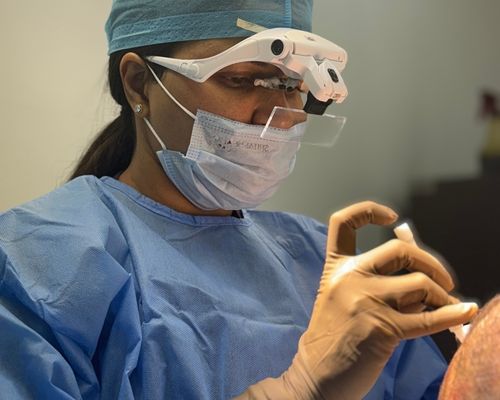
The surgeon matters more than the clinic name
Many clinics promote technology, offers, or large teams, but hair transplant results depend mainly on the person planning and performing the procedure. A well-known clinic does not automatically mean an experienced surgeon will handle your case. It is worth finding out who will actually design your hairline, extract the grafts, and place them. The more directly involved the doctor is, the more predictable the outcome tends to be.
Look for meaningful credentials
Not all certificates carry the same value. Training in dermatology or plastic surgery, followed by focused education in hair restoration, shows a strong medical foundation. International bodies such as the American Board of Hair Restoration Surgery and the International Society of Hair Restoration Surgery have clear standards for membership and assessment. These do not guarantee perfection, but they indicate that the surgeon has invested time in structured learning rather than short courses.
Ask who will perform each step
In some centres, technicians carry out most of the procedure while the doctor moves between multiple patients. This can affect graft handling, angle control, and overall safety. It is reasonable to ask, in simple terms:
– Who designs the hairline?
– Who extracts the grafts?
– Who makes the recipient sites?
– Who implants the follicles?
A transparent clinic will answer these questions without hesitation.
Technique is important, but planning is more important
Patients often focus on graft numbers or the name of a technique. While methods like advanced FUE or implanter-based placement can improve precision, they only work well when combined with careful planning. Factors such as donor strength, future hair loss, face shape, and natural hair direction determine whether the result will still look good ten years later. A responsible surgeon talks about long-term design, not just immediate density.
Be cautious with very low-cost packages
Extremely cheap offers usually involve shortcuts: overharvesting the donor area, rushing the procedure, or delegating most steps to untrained staff. The real cost may appear later as patchy growth, unnatural hairlines, or the need for a corrective surgery. A genuine consultation should include limitations and risks, not only promises.
Questions worth asking during consultation
– Am I a suitable candidate, and why?
– How many grafts do I realistically need?
– What will my donor area look like after the procedure?
– What results can I expect in 6 and 12 months?
– What happens if growth is lower than expected?
– Who will perform my procedure?
– What are the doctor’s credentials?
The way a doctor answers these questions often tells you more than before-after photographs.
Choose trust over pressure
A good surgeon will not rush you to book a date or push a package on the first visit. Hair transplant decisions should feel calm and informed. When you meet a doctor who listens to your concerns, explains limitations, and plans conservatively, you are usually on the right path.