
Does implanter FUE give more natural results?
If you have been researching hair transplants, you have probably come across terms like FUE, DHI, and implanter technique. Many clinics present these as completely different procedures, which can make the decision confusing. In reality, most modern hair transplants use FUE for graft extraction. The real difference often lies in how those hair follicles are implanted — and this step plays an important role in how natural the final result looks.
If you have been researching hair transplants, you have probably come across terms like FUE, DHI, and implanter technique. Many clinics present these as completely different procedures, which can make the decision confusing. In reality, most modern hair transplants use FUE for graft extraction. The real difference often lies in how those hair follicles are implanted — and this step plays an important role in how natural the final result looks.
Understanding what implanter FUE actually means
FUE (Follicular Unit Extraction) describes how hair follicles are taken from the donor area, usually at the back of the scalp. After extraction, those grafts must be carefully placed into thinning or bald areas.
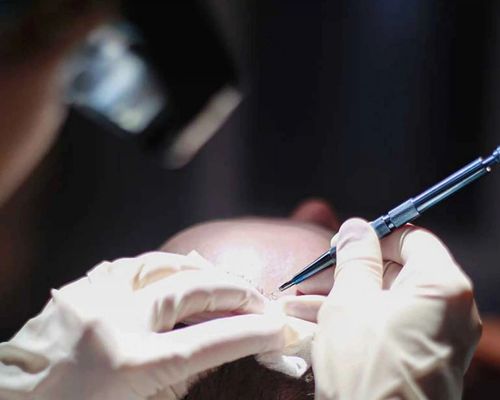
In traditional placement, small channels are created first and grafts are inserted using forceps. In implanter-based FUE, a specialised implanter pen allows the surgeon to place each follicle directly into the scalp while controlling depth, angle, and direction at the same time.
So the difference is not in removing the hair, but in how precisely it is placed.
Why implantation technique influences natural results
Natural hair does not grow straight upward or in uniform rows. Each strand follows subtle angles and patterns that vary across the hairline, temples, and crown. Recreating this requires careful control during implantation.
Implanter-based placement allows the surgeon to:
- control the angle and direction of each graft more precisely
- reduce unnecessary handling of follicles
- place grafts closer together when appropriate
- work delicately in visible areas like the frontal hairline
These factors can contribute to softer hairlines and more natural density when performed correctly.
Implanter placement vs traditional forceps
Both implantation methods can produce good outcomes when used by an experienced surgeon. The instrument itself does not guarantee success. However, implanter systems offer certain practical advantages.
Because the graft is loaded into the implanter and placed in one controlled movement, there may be less manipulation compared with repeated handling during forceps placement. This can be helpful when working with finer grafts or when designing detailed hairlines.
Traditional forceps placement remains effective in many situations, particularly in experienced hands. The key difference is the level of control available during placement rather than the label of the technique.
Who may benefit most from implanter FUE
Implanter-based techniques are often useful in situations where precision matters most, such as:
- creating a natural, age-appropriate hairline
- hair transplant procedures for women
- unshaven or discreet transplants
- patients seeking quicker return to routine activities
- refinement or corrective procedures
In these cases, controlled placement helps maintain a softer, less surgical appearance.
Technique alone does not determine success
One of the most common misconceptions is that choosing the “latest” technique automatically leads to better results. In reality, outcomes depend more on planning and surgical judgement than on instruments.
Donor area assessment, long-term hair loss prediction, graft distribution, and conservative design all influence whether the transplant will continue to look natural years later. An experienced hair transplant surgeon adapts the technique to the patient rather than applying the same method to everyone.
How patients should think about technique when choosing a surgeon
Instead of asking which method is best, a more useful question is how and why a surgeon uses a particular approach. During consultation, patients can ask:
- Who performs the implantation step?
- How is the hairline planned?
- How is graft survival protected during surgery?
- What results are realistic for my hair type and stage of loss?
Clear, balanced answers usually indicate thoughtful practice rather than marketing-driven claims.
The takeaway
Implanter-based FUE can help achieve highly natural results because it allows precise placement of each hair follicle. However, the technique works best when combined with careful planning and direct surgeon involvement. Ultimately, the experience and judgement of the surgeon remain more important than any single device or trend.